
Contemporary and historical documents of the region
Raising the water level of the Cheboksary hydroelectric power station reservoir
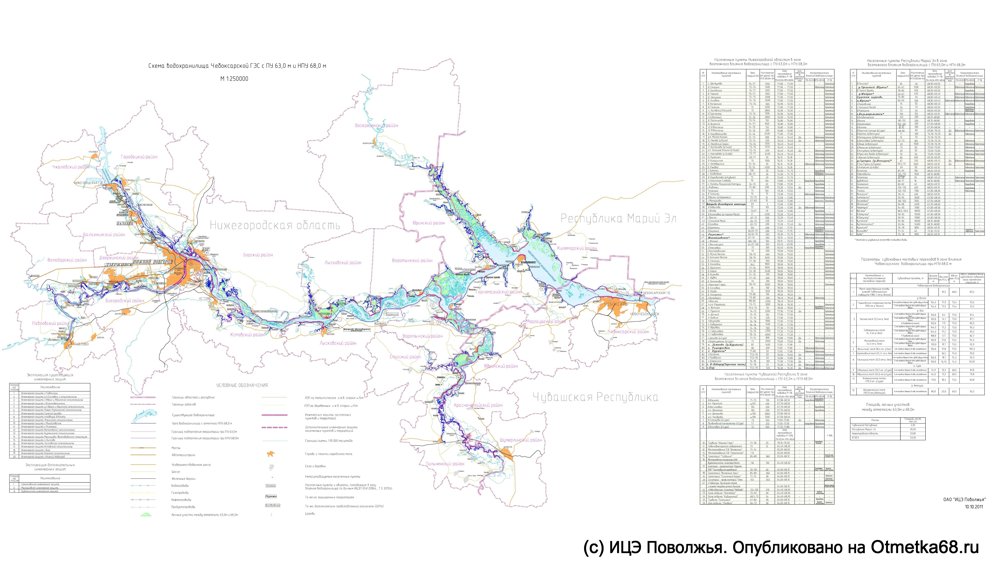 Diagram of the Cheboksary hydroelectric power station reservoir at the 63 m and 68 m marks
Prime Minister Putin ordered that a proposal from the Russian Ministry of Economic Development, agreed with the relevant ministries and the government of Chuvashia, be accepted for preparing, in 2010, amendments to the Cheboksary hydroelectric power station construction project, providing for the possibility of Raising the Cheboksary Reservoir Level.
The decision to prepare the proposal was made by Russian Minister of Economic Development and Trade German Gref during a visit to the Republic of Chuvashia on 24 November 2005.
In connection with the resolution of the issue of public oversight
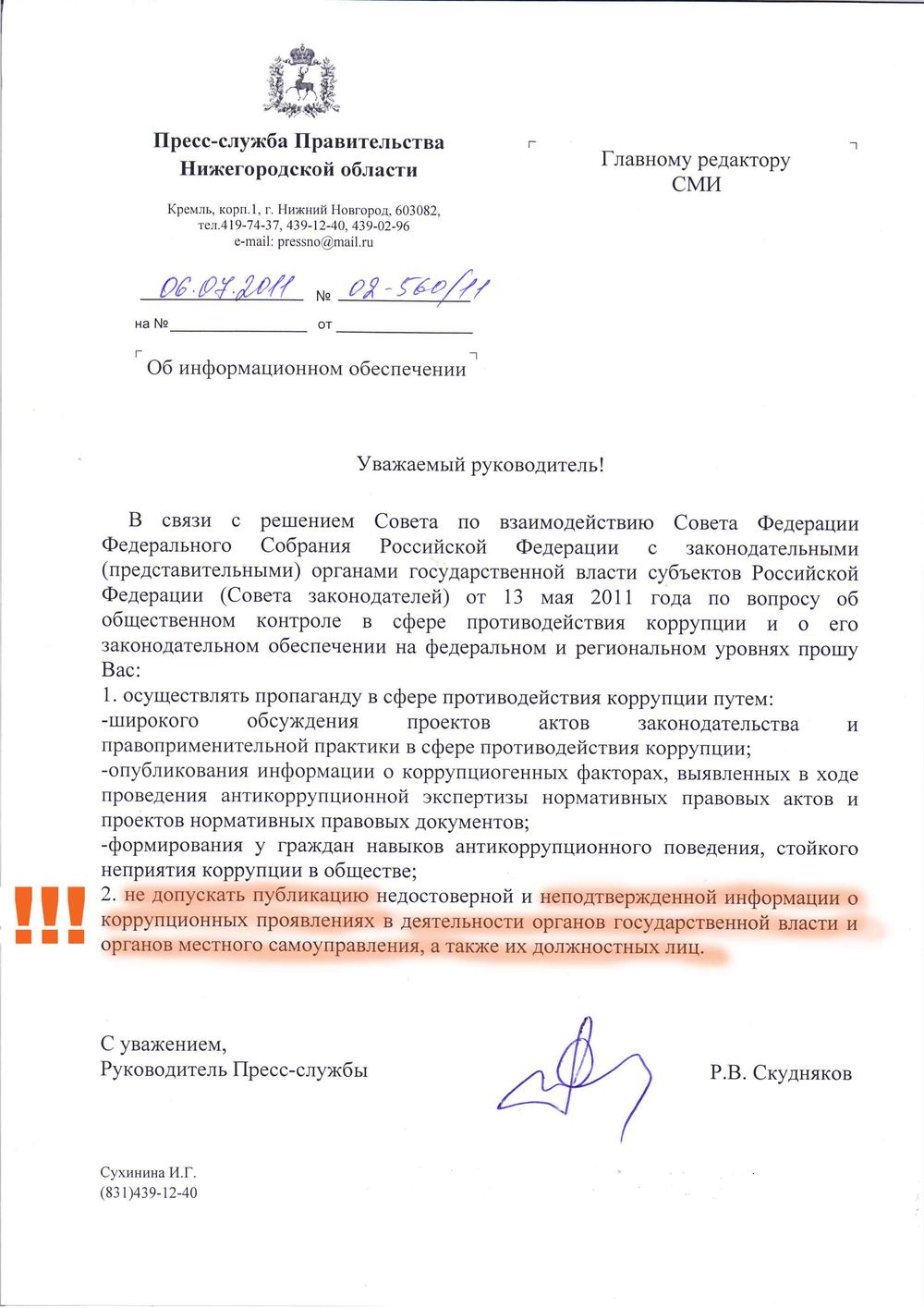
A message from Roman Skudnyakov, in his capacity as head of the Press Service of the Government of the Nizhny Novgorod Region, to editors-in-chief of the Mass Media. "Dear director! In connection with the resolution of the issue of public oversight.. I ask you.. 2. not to permit the publication of unreliable and unconfirmed information about corrupt practices in the activities of state authorities and local self-government bodies, as well as their officials"
Cabmen's fares
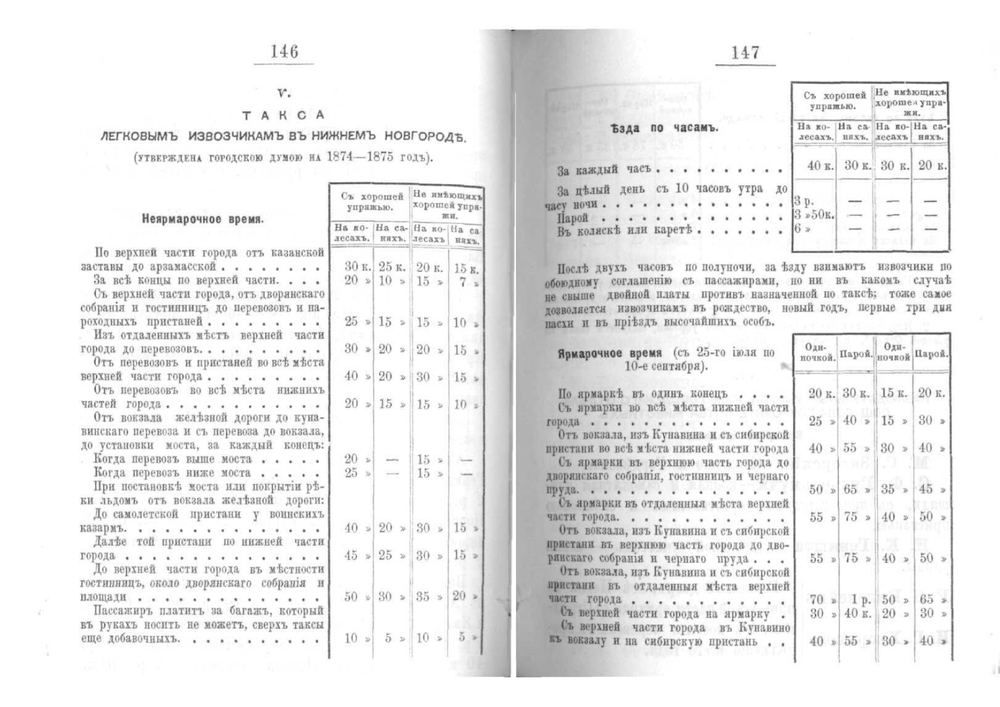 Cabmen's fares in Nizhny Novgorod. Approved by the City Duma in 1874-1875.
Map of 1792
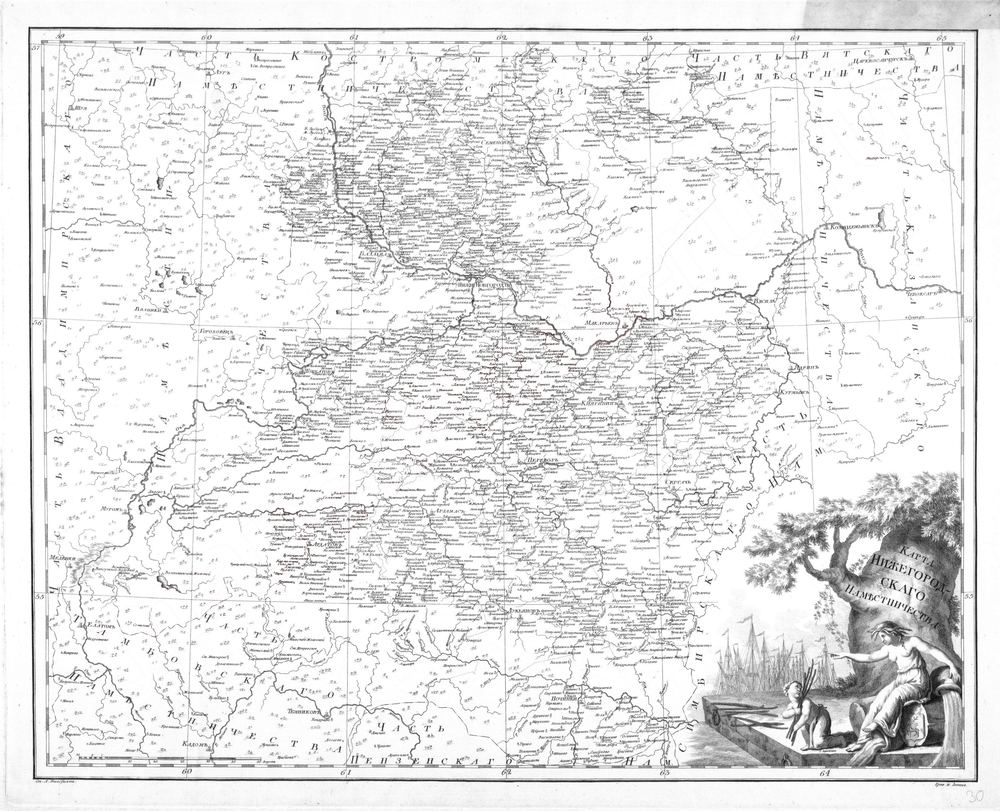 Map of Nizhny Novgorod Governorate, 1792.
Propiska
Propiska is a state system of population migration control that developed in the USSR and still exists in a number of states on its former territory, including Russia, the principle of which consists in the rigid attachment of citizens to their permanent place of residence.
Concept for the Rozhdestvenskaya Stora Development Project
Text quoted from the file posted on the project's official website, as of 16 June 2011.
The street suffers from boarded-up shops and abandoned real estate. As a result, people and businesses leave and leave behind a weakened tax base, from which the authorities must fund schools and many other social functions. And all too often crime and drug addiction take hold of life in such areas and accelerate their decline.
MAIN GOAL OF THE PROJECT: creating a new reality for the existing urban environment.
The zero-cycle proposals imply the start of changing the environment in the Rozhdestvenskaya Storona area and financial benefits for restaurants, cafes and tenants of the area at minimal cost.
At the same time, implementation of the zero cycle will confirm the presence of will and determination on the part of the city leadership regarding the reforms that have begun, will reveal their direction and will secure public support for the implementation of subsequent stages. The zero cycle will also be accompanied by a first wave of information support, which will provide PR support both for the activities themselves and for the activities of the city leadership as a whole. The zero-cycle activities are laid out in more detail than the rest. As the zero-cycle activities are prepared, they will be transferred to a schedule (Gantt chart) and filled in with specific resources and persons responsible.
Objective
Launch a creative direction for the area's development, publish a magazine about the area, its people and the development project, raise the awareness of the city's and the country's residents about the area and the reforms that have begun, generate interest and PR, create foot traffic on the street, identify people able to fill the website and produce new issues of the Rozhdestvenskaya Storona magazine on an ongoing, part-time basis, identify loyal groups of property owners and tenants in the area.
- 9. Create a permanent Think Tank for the "Nizhny Novgorod - Creative City" concept in the Rozhdestvenskaya Storona area. This center is needed by the city to implement other projects, to attract the best representatives of the public to solving city issues, and to form a coherent concept of a creative city
- 14. Create "regulated squats" for creative youth in the Sloboda area. Only until the start of reconstruction. This makes it possible to avoid the problem of vandalism against vacant premises and to develop the creative class.
- 23. Place a large number of guest houses on the street. Come up with a cover story together with the guest house owners. Come up with (or find) a story for each guest house, connected with the history of the building.
- 37. Attract ALL of the city's media resources (or a significant part of them) to place their offices and studios in the Rozhdestvenskaya Side area (in Moscow a similar project was implemented by a development company on the Novorizhskoye Highway. They managed to attract leading radio stations to their office center located far from Moscow).
Battle of the Pyana
And there was a very great host, and they went across the river, across the Pyana, and word came to them, telling them that Prince Arapsha was at Volchya Voda [Wolf Water]. But they grew careless and went about heedlessly, loading their armor onto their carts,[7] some into sacks, while for others the spearheads[8] had not yet been fitted, and shields and spears were not made ready. And they rode about with their garments slipped from their shoulders and their collars unfastened, as if overheated, for it was warm and the weather was sultry at that time. And wherever in the surrounding settlements[9] they came upon mead or beer, they drank themselves drunk without measure and rode about drunk. Truly - drunk beyond the Pyana! And their elders, and their princes, and their oldest boyars, the nobles, and the military commanders, all of them went off hunting, amusing themselves, imagining they were at home.
And at that time the pagan Mordvin princes secretly brought up a Tatar army from Mamai's Horde against our princes. And the princes knew nothing of it, and had received no word about it. And they reached Shipara, whereupon the pagans swiftly divided into 5 regiments, and suddenly, without warning, struck our host from the rear, striking and stabbing and cutting them down without warning. Our men could do nothing to help themselves and fled to the river, to the Pyana, with the Tatars behind them, striking them down.
And there they killed Prince Semyon Mikhailovich and many boyars. And Prince Ivan Dmitrievich fled in panic to the river, to the Pyana, pursued relentlessly, and threw himself on his horse into the river and drowned there, and with him many boyars and servants and countless people drowned in the river. This calamity occurred on the 2nd day of the month of August, on the feast day of the holy martyr Stephen, on a Sunday, at the 6th hour of the day after noon.
Teryushevo Uprising
And when his Grace, having come to the church, ordered that food be cooked at that cemetery, and that the firewood for the cooking be taken from that cemetery's grave-stakes, of which some thirty were burned, while he ordered that the remaining stakes and log frames on those same graves be burned as well, in order to destroy such godless and soul-harming superstitions, for it had been decreed that not only such unbaptized cemeteries set up near holy churches, but also actual mosques and pagan shrines be torn down everywhere by decree. And when his Grace came out of the church, the local clergy declared to him: it is dangerous, they said, for your Grace to stand here, for the Mordvins, they said, are advising you to be done harm; hearing this, he immediately sent to the village of Teryushevo, to the steward of those estates, the Georgian Prince Melkhisedek Baratayev, with a demand that such villains be prevented from carrying out their intent and that he be protected from them.